
Author: Vaibhav K

  • The Internet Needs a Trust Layer: Why Nudge is the Must-Have Browser Extension of 2026

    The Internet Needs a Trust Layer: Why Nudge is the Must-Have Browser Extension of 2026

    Have you ever been on a website, ready to buy something, but your gut suddenly tells you something is off?

    Maybe the price seems too good to be true. Maybe the website looks a little strange. Or maybe everything appears completely normal, but you still hesitate before entering your credit card details. We’ve all been there.

    The truth is, the internet feels a little broken right now. Even smart, careful people are getting tricked by fake websites that look almost identical to the real thing. The old advice of “just look for spelling mistakes” doesn’t really work anymore because scammers have become a lot more sophisticated.

    I’ve been looking for a way to stop second-guessing every click, and that’s why I want to introduce you to Nudge. It’s a free browser extension that acts like a trust layer for the internet, helping you quickly understand whether a website deserves your confidence before you engage with it.

    Why “Trusting Your Gut” Just Isn’t Enough Anymore

    The reality is that scammers have gotten incredibly good at what they do.

    Today, creating a fake website is easier than ever. A convincing copy of a popular store, bank, or service can be put together in a matter of minutes. To the average person, it can be almost impossible to tell the difference.

    Then there are those ads we all see while scrolling through social media. You know the ones. They show some amazing gadget or unbelievably cheap deal that seems impossible to ignore.

    Sometimes those stores are legitimate.

    But sometimes they aren’t. People place orders, enter payment details, and then discover the store disappears without a trace.

    The biggest problem is the mental exhaustion. We shouldn’t have to play detective every single time we want to read an article, shop online, or click a link someone shared with us.

    The internet was supposed to make life easier, not turn every browsing session into an investigation.

    Meet Nudge: Your Internet Bodyguard
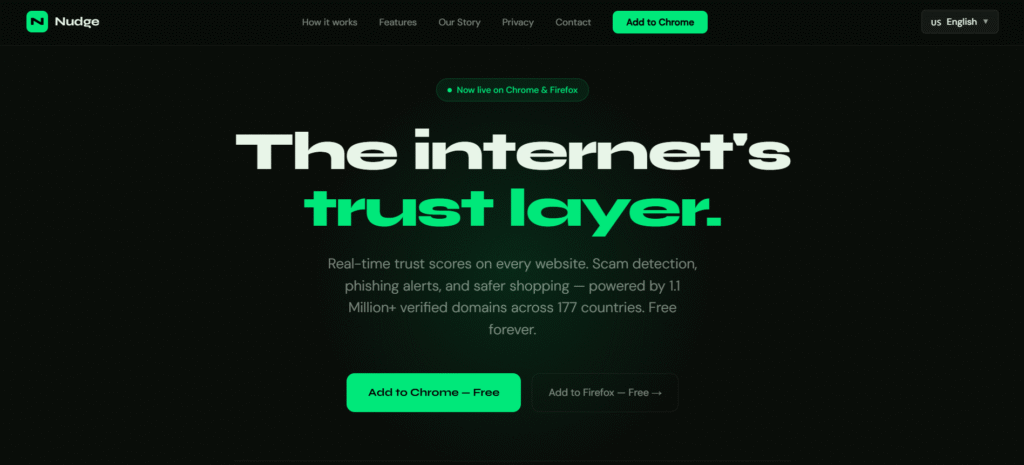
    This is where Nudge comes in.

    Think of Nudge like a digital bodyguard that sits quietly in your browser. While you browse the web, it helps evaluate the websites you’re visiting and gives you a simple signal about whether they’re trustworthy.

    Instead of spending your time researching every unfamiliar website, Nudge helps you make faster and more informed decisions.

    What I like most is that it doesn’t require any technical knowledge. You don’t need to be a cybersecurity expert. You simply install it and let it work in the background while you browse normally.

    Even better, it’s completely free to use.

    How It Actually Works (The Cool Features)

    Green Means Go

    When you land on a website, Nudge gives you a simple visual signal that’s easy to understand.

    • Green means the site has been verified and appears trustworthy.
    • Red means you should be extremely cautious and leave immediately.
    • The goal is simple: help you make safer decisions in seconds.

    No complicated reports. No confusing security warnings. Just a clear signal you can understand at a glance.

    Safe Searching

    Nudge helps before you even visit a website.

    • Trust indicators can appear alongside search results.
    • You get an extra layer of confidence before clicking.
    • Potentially risky sites become easier to spot.

    That means fewer surprises and fewer chances of ending up somewhere you never wanted to be.

    Inbox Protection

    Let’s be honest.

    We’ve all received those suspicious emails claiming our account has been locked, our payment failed, or we’ve won some random prize.

    Nudge helps by checking links and giving you additional context before you click.

    • Helps identify suspicious links.
    • Adds an extra layer of protection against phishing attempts.
    • Reduces the chances of accidentally landing on a fake website.

    Sometimes one extra warning is all it takes to avoid a major headache.

    Security That Doesn’t Spy on You

    If you’re anything like me, you probably don’t want another company tracking everything you do online.

    That’s one of the biggest concerns people have with browser extensions. Many users worry that the tool protecting them could end up collecting their browsing activity instead.

    That’s why privacy matters.

    Nudge is designed to focus on helping you evaluate websites while maintaining strong privacy standards. The goal is simple: provide safety and trust signals without turning your personal browsing habits into a product.

    In a world where it feels like every app wants more data from us, that approach is refreshing.

    Why I Think Every Internet User Needs Something Like This

    The internet has become an essential part of everyday life.

    We shop online. We bank online. We work online. We communicate online.

    Yet most of us still rely on instinct when deciding whether a website can be trusted.

    That doesn’t make much sense anymore.

    We wear seatbelts when we drive. We lock our doors when we leave home. We install antivirus software on our computers.

    Adding a trust layer to your browser feels like the next logical step.

    It’s not about being paranoid.

    It’s about making safer decisions without adding extra effort to your day.

    Let’s Browse With Peace of Mind

    The internet should be useful, exciting, and enjoyable.

    It shouldn’t leave us constantly wondering whether the next click is going to lead to a scam, a fake store, or a phishing page.

    That’s why tools like Nudge are becoming so important. They help restore something that’s been missing online for a long time: trust.

    You lock your front door at night to stay safe. It’s time to do the same for your browser.

    Nudge takes only a few moments to install, and it’s completely free.

    Download Nudge today and start browsing with greater confidence and peace

  • How a Website Can Propel Small Business Growth.

    How a Website Can Propel Small Business Growth.

    The Importance of Online Presence for Small Businesses

    In today’s digital landscape, an online presence has become crucial for the sustainability and growth of small businesses. A well-structured website acts as a cornerstone for establishing brand recognition and credibility. Research indicates that a significant percentage of consumers perform online research before making a purchasing decision, often seeking information that helps them evaluate their options. In fact, according to various studies, approximately 81% of shoppers conduct online research before engaging in a transaction. This statistic underlines the importance of a compelling online presence that can lead potential customers to your business.

    Moreover, having a website enhances a business’s visibility, enabling it to reach a larger audience than traditional marketing methods. With effective search engine optimization (SEO) strategies, small businesses can improve their online rankings, making it easier for prospective clients to find them. This expanded reach not only attracts more traffic but also fosters new opportunities for engagement with customers who may not have been accessible otherwise.

    A well-designed website fosters trust among potential customers. Consumers are more likely to engage with a brand that has a professional online representation, as it reflects a commitment to quality and transparency. In an age where online scams and fraudulent businesses are prevalent, having a credible website can significantly influence consumers’ purchasing choices. By providing accurate information, insightful content, and customer testimonials, businesses can cultivate a sense of reliability that encourages visitors to become loyal customers.

    In conclusion, the significance of an online presence for small businesses cannot be overstated. A strong website not only serves as an essential tool for brand establishment but also helps businesses connect with a broader audience while building trust with potential clients. Thus, investing in a robust online presence is a strategic step toward achieving sustained growth and success in today’s competitive market.

    Key Features of an Effective Small Business Website

    In the contemporary digital landscape, an effective small business website serves as a pivotal tool for driving growth and engaging customers. One of the foremost features is user-friendly design, which ensures that visitors can easily navigate the site. A clean layout, intuitive structure, and aesthetically pleasing elements all contribute to a positive user experience. For instance, utilizing clear call-to-action buttons can enhance interaction, guiding users effortlessly from one section to another.

    Moreover, mobile responsiveness is indispensable. With an increasing number of consumers accessing websites via smartphones, a website that adapts seamlessly to different screen sizes is critical. A mobile-friendly version retains the same functionalities and visual appeal as its desktop counterpart, enabling consumers to browse and make purchases on their devices comfortably. This not only enhances user experience but also positively influences search engine rankings, promoting visibility.

    Search engine optimization (SEO) further elevates a small business website’s effectiveness. By implementing relevant keywords, optimizing meta tags, and ensuring high-quality backlinks, small businesses can increase their online presence. SEO strategies enhance visibility on major search engines, ultimately leading to higher traffic and conversion rates. Additionally, employing local SEO practices can attract nearby customers, providing targeted outreach.

    The presence of quality content is another essential feature. Informative, engaging, and relevant content contributes significantly to audience retention and establishes the business’s authority in its field. Blog posts, informative articles, and product descriptions provide value to visitors while also enhancing SEO performance. Furthermore, easy navigation plays a crucial role in retaining users. A straightforward menu and clearly labeled categories allow customers to find information with minimal effort, enhancing their overall experience.

    Marketing and Outreach Through Your Website

    In today’s digital age, a website serves as a cornerstone for small business marketing strategies. It offers an invaluable platform for businesses to implement various online marketing efforts, which together can significantly enhance brand exposure and customer engagement. One effective strategy is content marketing, which involves creating and sharing valuable content to attract and retain a clearly defined audience. By regularly updating their website with informative blog posts, articles, or guides related to their industry, small businesses can position themselves as experts and foster trust among prospective customers.

    Another essential component of marketing through a website is social media integration. By linking social media profiles directly to their website, businesses can drive traffic and encourage visitors to engage with their brand across different platforms. This interconnectedness allows small businesses to share promotions, new products, or relevant content seamlessly, facilitating greater audience interaction and expanding their reach. It is crucial to maintain a consistent voice and visual brand identity across these platforms to ensure cohesive marketing.

    Email marketing is also a potent tool for outreach. A website can be utilized to collect subscriber information through newsletter sign-ups or special offers. By sending regular newsletters that include promotions, company updates, or valuable content, small businesses can keep their customer base informed and engaged. This approach not only helps in retaining existing customers but also attracts potential customers through targeted campaigns.

    Lastly, utilizing analytics tools is essential for tracking the performance of marketing efforts implemented through a website. By analyzing data related to visitor behavior, conversion rates, and engagement metrics, businesses can understand which strategies are effective and which need adjustments. This data-driven approach enables small businesses to refine their marketing tactics and achieve sustained growth over time.

    Real-Life Success Stories: Websites That Transformed Small Businesses

    In the digital age, a well-designed website has become a crucial asset for small businesses aiming for substantial growth. Numerous small enterprises have utilized their online presence to overcome challenges and achieve remarkable success. One such example is a local bakery, which struggled to attract customers in a competitive market. Before establishing a website, the bakery relied solely on word-of-mouth referrals. After launching an interactive website showcasing their unique baked goods and sharing customer testimonials, they experienced a dramatic increase in foot traffic. The bakery implemented an online ordering system, allowing customers to place orders for pickup, which further boosted sales and expanded their customer base.

    Another inspiring example involves a regional landscaping company that faced difficulties in reaching its target market. With limited visibility and no online presence, they were missing out on potential clients. After developing a user-friendly website featuring a portfolio of their work, customer reviews, and easy contact forms, the business saw a significant rise in inquiries. The landscaping company employed search engine optimization techniques, ensuring they ranked higher in search results. This strategic move not only improved their visibility but also led to a 50% increase in new customers within the first year of their website launch.

    Furthermore, consider a family-owned boutique clothing store that was struggling to compete with larger retailers. By creating an eCommerce website, they could cater to a broader audience beyond their local community. By integrating social media channels and employing targeted online marketing strategies, the boutique experienced an impressive increase in online sales. Their website enabled them to share their brand story, engage with customers, and showcase new arrivals instantly, creating a loyal customer base. These real-life success stories underscore the transformative power of an effective website, illustrating how small businesses can leverage their online presence to drive growth and build lasting relationships with customers.